
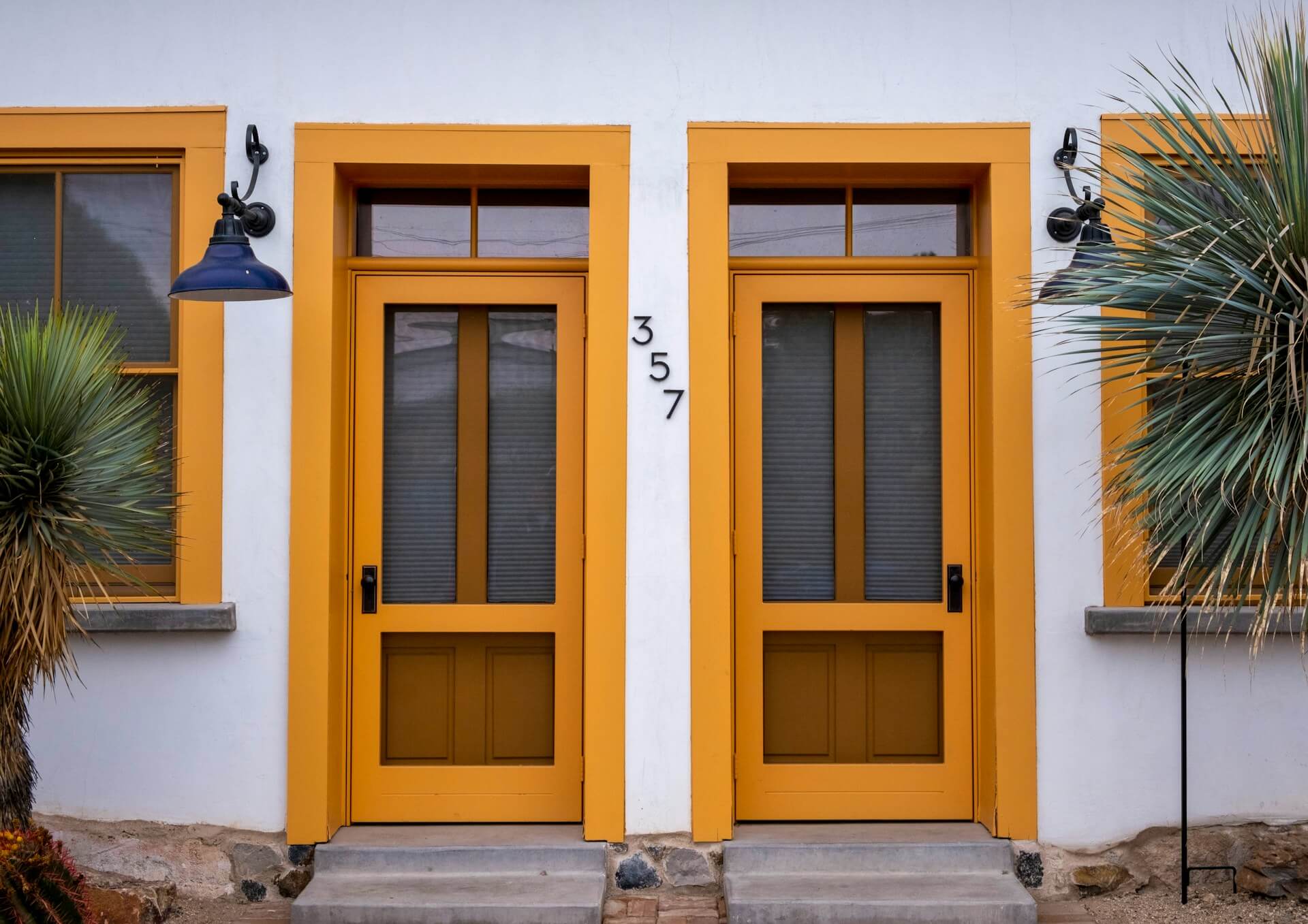
If you’re upgrading your front door in Newcastle, security is almost always at the top of the list. Style matters. Colour matters. Kerb appeal matters. But ultimately, your front door is the primary barrier between your home and the outside world.
One of the most common questions we’re asked at Windows & Doors Newcastle is simple: how secure are composite doors compared to uPVC?
Both options are widely used across Newcastle, from Victorian terraces in Heaton to 1930s semis in Gosforth and modern estates in Great Park. Both can be secure. However, there are important structural and performance differences that are worth understanding before you invest.
This guide breaks down how composite and uPVC doors compare in real-world security, what features actually matter, and which option is best suited to different types of homes.
Understanding the Construction Difference
Before comparing security, it helps to understand how each door is built.
What Is a uPVC Door?
A uPVC door is made primarily from unplasticised polyvinyl chloride. The frame and door slab are hollow and typically reinforced internally with steel.
The outer skin is uPVC, and the internal core may contain insulating foam.
uPVC doors have been popular in the UK for decades due to affordability and low maintenance.
What Is a Composite Door?
A composite door is made from multiple materials layered together. It typically includes:
- A solid timber or high-density foam core
- A reinforced internal structure
- A durable Glass Reinforced Plastic (GRP) outer skin
- Steel or aluminium strengthening elements
The result is a thicker, heavier and more rigid door compared to standard uPVC.
Construction differences directly affect strength and resistance to forced entry.
Structural Strength: Composite vs uPVC
One of the biggest security differences lies in the rigidity of the door slab.
Composite doors are significantly thicker and denser than most standard uPVC doors. Their solid core construction makes them more resistant to impact and forced entry.
uPVC doors rely heavily on internal steel reinforcement for strength. While reinforced models are secure, lower-end versions can flex under pressure.
In practical terms, a high-quality composite door is generally stronger and more resistant to kicking or shoulder-force attacks than a standard uPVC door.
Multi-Point Locking Systems
Both composite and uPVC doors typically use multi-point locking systems.
When the handle is lifted and locked, multiple locking points engage along the door frame. These may include hooks, bolts and deadlocks.
In many cases, the locking mechanism itself is similar across both door types. However, the surrounding door material influences how effective that locking system is under stress.
A stronger door slab, such as composite, provides better overall resistance when combined with multi-point locks.
Resistance to Warping and Weak Points
Security is not just about brute force. It is also about long-term durability.
uPVC doors can warp over time, particularly if exposed to strong sunlight or temperature changes. Warping may cause alignment issues, affecting how securely locks engage.
Composite doors are far more resistant to warping due to their layered construction and GRP outer skin.
A door that remains perfectly aligned over time maintains its security performance.
Glazing Security in Both Options
Many front doors include glazed panels for natural light.
Security here depends on the type of glass used rather than the door material itself.
Toughened and Laminated Glass
Both composite and uPVC doors can incorporate toughened or laminated safety glass.
Laminated glass, in particular, adds an extra layer of protection because it holds together even if cracked.
When choosing either door type in Newcastle, specifying high-security glazing for accessible areas is important.
The frame may differ, but glazing quality plays a significant role in overall security.
Cylinder Locks and Anti-Snap Protection
One of the most common methods of forced entry in the UK is cylinder snapping.
This technique targets the euro cylinder lock rather than the door slab.
Both composite and uPVC doors can be fitted with anti-snap, anti-pick and anti-drill cylinders.
Upgrading to a high-security cylinder is critical regardless of door type.
In many cases, the lock specification matters more than the outer material when it comes to preventing lock manipulation.
Secured by Design and PAS 24 Testing
Security performance can be independently verified through certification.
Secured by Design
Secured by Design is a UK police initiative that recognises products meeting enhanced security standards.
Both composite and uPVC doors are available with Secured by Design accreditation.
PAS 24 Testing
PAS 24 is a security standard that tests doors against simulated attack methods.
High-quality composite and uPVC doors can both achieve PAS 24 compliance.
However, composite doors are more commonly associated with premium security specifications.
If maximum security is your priority in Newcastle, always check for PAS 24 and Secured by Design certification.
Frame Strength and Installation
Security does not rely solely on the door slab.
The frame must be reinforced and properly fixed into the surrounding brickwork.
Both composite and uPVC systems can be installed within reinforced frames.
Professional installation is essential. Even the strongest composite door will underperform if not anchored correctly.
At Windows & Doors Newcastle, we treat installation as part of the security system rather than a separate step.
Real-World Security in Newcastle Homes
In practice, both composite and high-quality uPVC doors provide strong security when properly specified.
However, composite doors offer additional reassurance due to:
- Thicker solid core construction
- Greater resistance to impact
- Improved long-term stability
uPVC doors remain secure when reinforced and fitted with quality locks, but cheaper models may not offer the same rigidity.
For homeowners in urban or high-traffic areas of Newcastle, the additional structural strength of composite often feels worthwhile.
Cost Differences and Value Considerations
Composite doors typically cost more than standard uPVC doors.
In Newcastle, a quality composite door installation may range from £1,200 to £2,000 depending on specification.
uPVC doors are generally more affordable, often ranging from £800 to £1,400.
The security difference is real, but both can meet strong standards when specified correctly.
The decision often comes down to budget, aesthetic preference and long-term plans.
Appearance and Perceived Security
Composite doors often look more substantial due to their thickness and detailed panel designs.
They can replicate traditional timber doors convincingly, making them ideal for Victorian and 1930s Newcastle homes.
uPVC doors sometimes appear lighter or more plastic in finish, although higher-end options have improved significantly.
Perceived strength can influence peace of mind, even if both meet certification standards.
Final Thoughts: How Secure Are Composite Doors Compared to uPVC?
Composite doors are generally more secure than standard uPVC doors due to their thicker, solid-core construction and increased resistance to impact.
However, both door types can achieve high security standards when fitted with reinforced frames, multi-point locking systems and anti-snap cylinders.
The real difference lies in structural strength and long-term durability rather than locking mechanisms alone.
For Newcastle homeowners prioritising maximum security and longevity, composite doors typically provide the strongest option.
For those balancing budget and performance, a well-specified uPVC door can still offer strong protection.
Ultimately, security depends on a combination of door construction, lock quality and professional installation. Choosing the right system ensures your home is protected without compromising style or performance.
Get A Quick Quote
Please provide your contact details here and we’ll get back to you shortly with a quote. We aim to respond to all quote requests in 24 hours.

